Most patients undergoing total knee replacement receive implants made from cobalt-chromium alloy — a material chosen for its strength, wear resistance, and decades of clinical data. For the majority this is straightforward. For the estimated 10–15% of the population with some form of metal hypersensitivity, however, it introduces a risk that deserves careful pre-operative consideration. The Medacta SensiTiN coating was developed to address this directly, without asking patients to compromise on implant performance or longevity.
Metal Hypersensitivity and Joint Replacement — How Common Is It?
Metal allergy is more prevalent than most people realise. Studies consistently place the rate of metal sensitivity in the general population at 10–15%, with nickel being the most common allergen — affecting approximately 13–14% of people. Many are aware of this only from reactions to cheap jewellery, watch straps, or jeans buttons.
In the context of joint replacement, the relevant metals shift. Standard knee implants use cobalt-chromium-molybdenum (CoCrMo) alloy for the femoral and tibial components. This alloy is biocompatible and mechanically ideal, but it does release small quantities of cobalt, chromium, and molybdenum ions into the surrounding tissue through a process of electrochemical corrosion. All metallic implants do this to some degree — it is a property of metal in a biological environment, not a defect of any particular design.
A study of 233 patients with knee replacements found that 15.87% tested positive on patch testing for metal sensitivity — and notably, chromium emerged as the most common allergen (11.6%), followed by nickel (8.6%) and cobalt (6.4%). This is a different pattern from the general population, where nickel dominates. The shift reflects the specific ions released by CoCr implants over time.
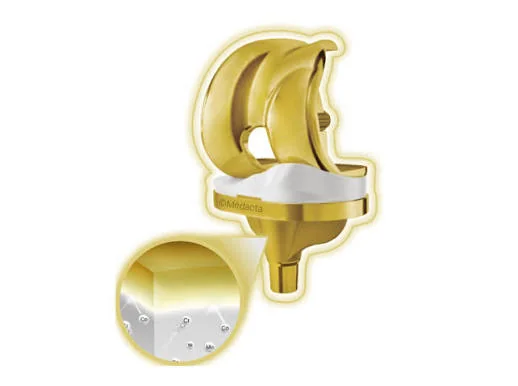
How Metal Ions Cause Problems
The mechanism of metal hypersensitivity in joint replacement is a Type IV delayed cell-mediated immune reaction — the same immunological pathway responsible for allergic contact dermatitis. Metal ions released from the implant bind to native proteins in the surrounding tissue, forming metal-protein complexes that the immune system interprets as foreign. This activates specific T-lymphocytes and macrophages, triggering an inflammatory response that can damage periprosthetic tissue over time.
The clinical presentation takes two distinct forms. The first is localised dermatitis: an erythematous, sometimes scaly rash around the surgical scar, typically appearing within one to three months of surgery. It predominantly affects women and may improve with topical steroids. It is uncomfortable and distressing, but not usually a sign of implant failure.
The second — and more clinically significant — presentation is persistent painful synovitis. Patients experience ongoing pain, swelling, effusion, and stiffness in the absence of infection. Standard inflammatory markers (ESR, CRP) and joint aspiration cultures come back negative. This presentation typically appears between two months and two years post-operatively and, if not recognised, can lead to unnecessary reoperation, further investigation, and prolonged disability.
It is important to note that metal hypersensitivity is a diagnosis of exclusion in this context. All other causes of failed knee replacement — infection, instability, loosening, malrotation, crystalline arthropathy — must be systematically ruled out before attributing persistent symptoms to metal allergy. The diagnosis is not made by a positive patch test alone.
"A patient who presents with persistent pain, swelling, and a negative infection workup after knee replacement has a differential diagnosis that includes metal hypersensitivity. Not as a first thought — but as something that should not be missed."
Dr Chien-Wen Liew — Orthopaedics 360, AdelaideTesting for Metal Allergy Before Knee Replacement
The mainstream expert position, supported by data from multiple published reviews, is that routine patch testing before primary total knee replacement is not warranted. There is no evidence that universal pre-operative screening reduces adverse outcomes. The test is uncomfortable, has a moderate false-positive rate, and does not reliably predict deep-tissue implant reactions from skin sensitivity results alone.
Testing is reserved for patients who volunteer a convincing personal history of significant metal contact allergy — particularly those who have experienced documented reactions to cobalt, chromium, or nickel-containing materials such as jewellery, watch buckles, or dental work. In these patients, pre-operative patch testing or in vitro lymphocyte transformation testing (LTT) can inform implant selection.
If a patient has a strong history of metal sensitivity, the pre-operative discussion at Orthopaedics 360 will include implant options. The choice of implant material and bearing surface is discussed in the context of individual anatomy, activity level, and allergy history, with the goal of selecting the optimal construct for that specific patient.
What Is the Medacta SensiTiN Coating?
The Medacta SensiTiN coating is a titanium nitride (TiN) layer applied to the surface of cobalt-chromium knee implant components via a process called physical vapour deposition (PVD). This creates a strong molecular bond between the coating and the underlying alloy — not a superficial film, but an integrated surface modification that is highly resistant to chipping, delamination, and wear.
The coating has several distinctive properties. It gives the implant its characteristic gold colour — recognisable intraoperatively and in product photography. The surface hardness is up to four times greater than standard CoCr alloy, improving resistance to scratching. Surface roughness is below 0.05 micrometres — exceptionally smooth — which improves synovial fluid lubrication at the bearing interface. Most significantly for allergy patients, the coating reduces metal ion release by up to 90% compared to uncoated implants, based on Medacta laboratory data.
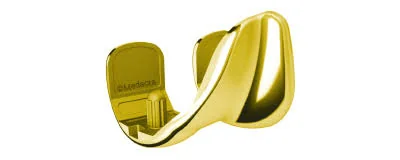
The SensiTiN coating is available across the full Medacta GMK knee system — primary total knee replacement, partial (unicompartmental) knee replacement, and revision constructs. This means that a patient who requires a coated implant can be accommodated regardless of the complexity of their case. The GMK Sphere SensiTiN is registered with the Australian Therapeutic Goods Administration (TGA, ARTG 400440).
It is worth being precise about what SensiTiN is and is not. It is a barrier coating that prevents the release of metal ions from the underlying CoCr alloy. The implant itself is still CoCr — the alloy that provides the structural integrity, fatigue resistance, and wear characteristics that have made it the dominant material for knee arthroplasty. SensiTiN does not change the mechanical performance of the implant; it changes only its surface interaction with the biological environment. In this sense, it is a targeted solution to a specific problem, not a wholesale change to the implant design.
Clinical Evidence for SensiTiN-Coated Implants
The clinical data supporting TiN-coated knee replacements is now mature enough to draw meaningful conclusions. Several independent studies have examined whether coating the implant changes clinical outcomes — and consistently found that it does not, in either direction.
A matched-cohort study by Lustig et al. (SICOT-J, 2023) compared 17 TiN-coated mobile-bearing total knee replacements with 34 uncoated CoCrMo controls at five years. Knee Society Scores were 170.6 in the TiN group versus 180.7 in the CoCrMo group — a difference that was not statistically significant (p=0.19). Survivorship was equivalent. The conclusion: no complication related to the coated implant, and satisfactory outcomes for metal-sensitive patients.
A longer-term study by Thienpont (Arch Orthop Trauma Surg, 2022) followed 53 titanium niobium nitride (TiNbN) coated knee replacements against 103 conventional CoCr controls at a mean of 6.5 years. Survivorship was 96% in both groups. There were no differences in clinical, radiological, or patient-reported outcomes.
These findings are clinically important: they establish that selecting a coated implant for a metal-sensitive patient does not represent a compromise. The patient receives an implant with equivalent mechanical performance and equivalent long-term survivorship — with the added protection of a surface barrier against the specific metal ions most likely to trigger an immune response in a susceptible individual.
For more detail on how long knee replacements last and the registry data underpinning our implant selections, see the dedicated article on implant longevity.
Who Should Consider a SensiTiN-Coated Implant?
The decision to use a SensiTiN-coated implant is made on an individual basis. As noted, routine pre-operative metal allergy screening is not standard practice. However, the following patient profiles warrant a specific conversation about implant material selection:
- Patients with documented nickel, cobalt, or chromium allergy confirmed on previous patch testing or by a history of dermatological review
- Patients with significant jewellery reactions — persistent redness, blistering, or dermatitis in response to metallic jewellery, watches, or clasps
- Patients with a history of reactions to dental metalwork or other implanted metal devices
- Patients who have had a previous joint replacement and experienced unexplained persistent pain or synovitis with a negative infection workup — where metal hypersensitivity was not previously considered
If you fall into any of these categories, it is important to raise this at your initial consultation at Orthopaedics 360. The pre-operative planning process — which includes 3D CT-based patient-specific technology — will incorporate your implant selection, and the choice of a SensiTiN-coated construct can be planned and ordered well in advance of your surgical date.
It is also worth noting that the SensiTiN option exists across the primary, partial, and revision Medacta knee range. If you are undergoing a kinematic alignment knee replacement — as all patients at Orthopaedics 360 do — the SensiTiN version of that implant is available and does not require any change to the surgical technique, alignment philosophy, or planning workflow.
Frequently Asked Questions

Orthopaedic Surgeon, Adelaide
Metal Allergy and Knee Replacement — The SensiTiN Coating
Download a concise reference guide covering metal hypersensitivity, SensiTiN coating technology, and who should consider a coated implant.