Most hip and knee replacement patients follow a predictable and reassuring recovery trajectory - with meaningful improvement at each milestone. Understanding what to expect at each stage helps you measure your progress accurately and know when to seek help. This guide outlines the typical post-operative journey from discharge to full recovery.
Week 1–2: Home from Hospital
The first two weeks at home are focused on pain management, wound care, and gradually increasing independence. Most patients experience significant pain that is well-controlled with the medications provided. Take these regularly as directed - do not wait for pain to become severe.
Keep the wound covered with the Hypafix dressing. Elevate the limb when resting. Ice packs applied over the dressing for 20 minutes several times a day reduce swelling significantly in the first week.
Your 2-week check is performed by our nurse. She will review your wound and surrounding soft tissue, and discuss with you how things are going. Dr Liew is usually in attendance for this review.
Week 3–6: Gaining Independence
By week 3–6, most patients are walking with one stick or have progressed to no aids. Driving becomes possible for most patients at 2–3 weeks (automatic vehicle), once off strong pain medication and able to perform an emergency stop. Confirm with Dr Liew before driving.
Swimming and hydrotherapy are permitted from 4 weeks post-operatively. Physiotherapy continues - this period is critical for regaining strength and range of motion.
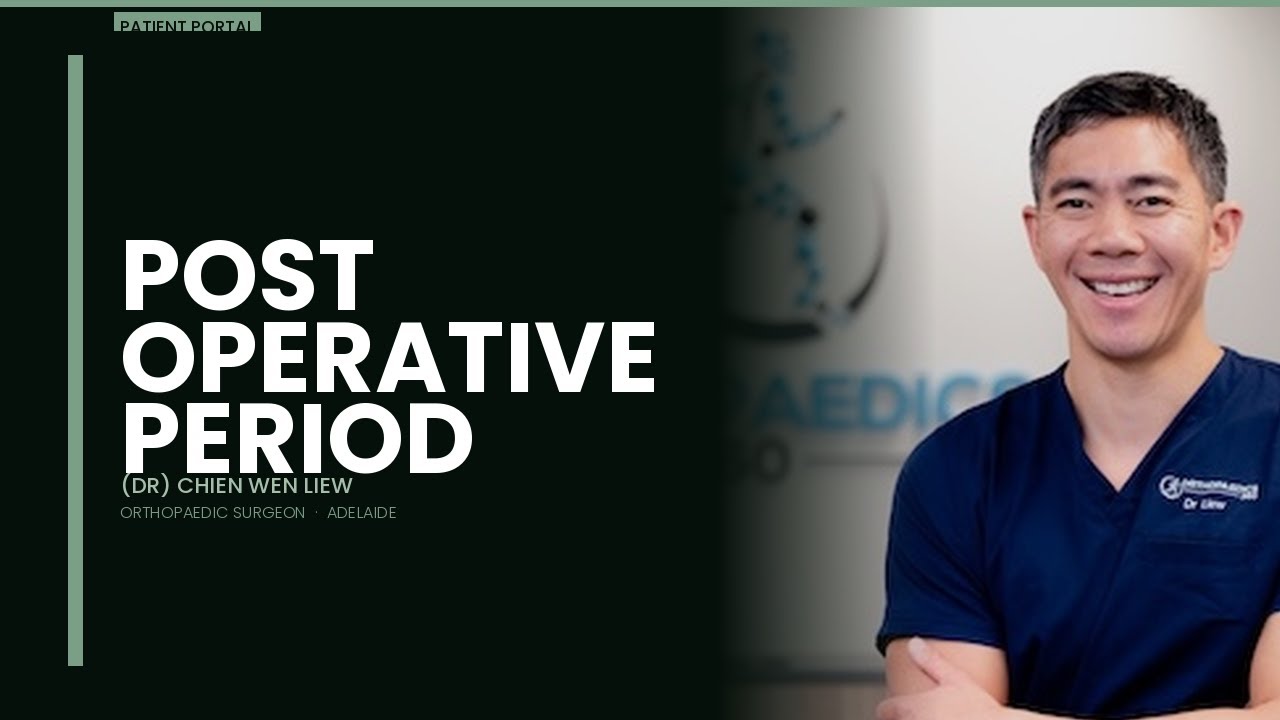
Watch Dr Chien-Wen Liew discuss this topic.
Month 2–6: Increasing Activity
Most patients feel dramatically better by 2–3 months. Walking is comfortable, sleep is improved, and daily activities are largely unrestricted. Continue to build strength through low-impact exercise.
Avoid high-impact activity long-term - running, jumping, and heavy contact sport place significant repetitive load on the implant and are not recommended. Golf (walking), cycling, and swimming are all compatible with a joint replacement long-term.
Frequently Asked Questions
Changing your own hip (THR) dressing →
Changing your own knee dressing →
Please complete the SCRIPTS form if you need further medication.
Usually we would recommend taking Panadol or Panadol Osteo regularly for the first two weeks. The stronger medications such as Palexia and Endone can be taken as required. Most people find night-time the worst - so when you are weaning off the medications, please wean off the night-time medication last.
Many patients will not need to take regular pain medication, so use pain medication only as required. Should you need further medication, please complete the scripts request form.
Download Patient Summary
A one-page branded summary of this topic - QR code links to the video or full article.