Your nutritional status and body weight are among the most modifiable factors that influence your surgical outcome. Preparing well - in terms of what you eat, how you manage your weight, and how you optimise your nutritional reserves - can meaningfully improve both your readiness for surgery and the quality of your recovery.
Why Body Weight Matters
Elevated BMI is associated with higher complication rates after joint replacement surgery. These include increased infection risk, wound healing difficulties, greater anaesthetic complexity, and higher revision rates. While joint replacement can be performed safely in patients with a high BMI, the risk profile is meaningfully elevated.
I discuss weight with my patients not to discourage surgery, but because weight loss - even modest amounts - can produce a measurable improvement in surgical risk. A reduction of 5–10% of body weight before surgery can lower complication rates, reduce surgical difficulty, and improve the longevity of the implant. For patients with a BMI above 40, I may recommend a dedicated weight management programme before proceeding to surgery.
"Even modest weight loss before surgery can meaningfully change your risk profile and the quality of your outcome."
- Dr Chien-Wen LiewProtein, Vitamins, and Healing
Beyond weight, your nutritional status - specifically your protein intake and micronutrient levels - has a direct impact on wound healing, muscle recovery, and immune function in the weeks following surgery. Patients who are malnourished or protein-deficient going into surgery consistently show slower recovery, poorer wound healing, and higher risk of infection.
In the weeks before surgery, I encourage patients to focus on adequate protein intake. A general target is 1.2–1.5 grams of protein per kilogram of body weight per day. This supports muscle maintenance during the recovery period and provides the building blocks for tissue repair. Good protein sources include lean meats, eggs, legumes, dairy, and fish.
Vitamin D deficiency is common in South Australia, particularly in older adults, and is associated with impaired bone and muscle function. If you are deficient, supplementation before surgery is advisable. Iron levels should also be checked pre-operatively - anaemia at the time of surgery increases transfusion risk and slows recovery.
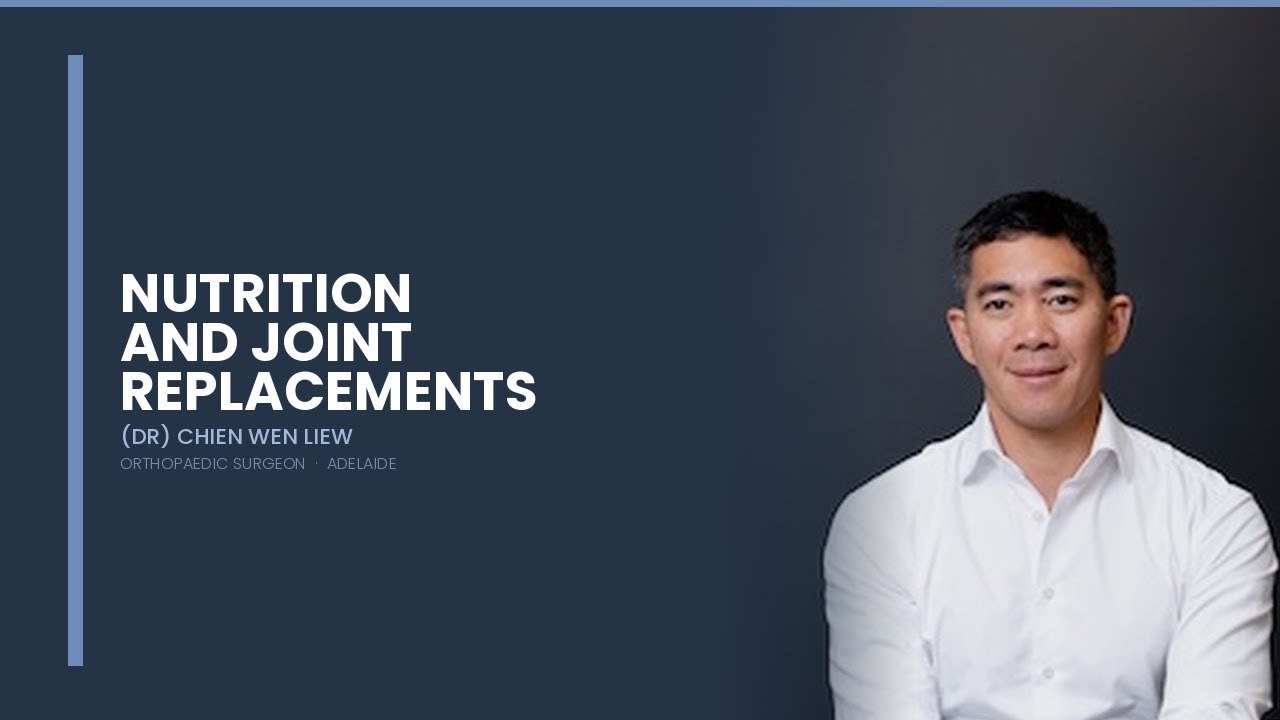
Dr Chien-Wen Liew outlines how nutrition and hydration before and after surgery can support recovery from a hip or knee replacement.
Read transcript
0:00 · Start
Hi,, I'm Dr Chien-Wen Liew and I'm a hip and knee replacement surgeon. Today, I wanted to talk a little bit about post-operative nutrition. Now, often we have a lot of emphasis on the physical aspects of hip and knee replacement recovery. Post-operative nutrition and pre-operative nutrition as well are both extremely important in optimising recovery from any surgery. We know that the body does go through some strain after surgery, and that can be from the multiple agents that you receive from the anaesthetic.
Just to the overall things like blood loss, discomfort, swelling, and just the general body's reaction to surgery. Now, often it is overlooked about nutrition when it comes time to healing. But we know from a lot of data that ensuring that your diet is of a high quality, that you're receiving enough hydration and nutrition. And all of those things can support your recovery and may help reduce the risk of complications,
especially from things like wound healing in particular, we look at some of the factors, such as protein usage. We know that protein has a huge impact upon wound healing. And if you do not feel like your diet is a very good one, then it often is the case that we would suggest for you to seek some advice from either a dietitian or your general practitioner. In general,
for most people who have quite a balanced diet, this really won't apply for most of you. As often, you are getting enough nutrients through regular whole foods that it isn't required that you supplement those with anything else. Now, if you feel like your diet is lacking, or you're really not feeling that hungry before or after the surgery, it probably isn't a bad idea to start some general health increases in your supplementation to ensure that there are no deficiencies.
As you're probably aware, often, vitamins can be taken on a daily basis with very little value if you're well nourished. However, if you feel like you're not, then taking a general health multivitamin may help to bolster some of those deficiencies in your diet. If you feel like you need them now often, one of the things that we look for is protein usage, and after surgery, taking some protein may well aid in the improvement of your wound healing capabilities and your general well-being.
Remember that during surgery you'll lose a little bit of blood. So restoring things like protein and iron are really important in ensuring a speedy recovery. And one where your body turns back to its normal homeostasis quicker.
2:55 · When we look at supplementation
Now, we often look at supplementation in the case of people who are struggling to heal their wounds, or in those people who have other metabolic conditions. That may impact on how they absorb food or how they get nourished from their regular supplements. Some of the supplements which can be beneficial for you in the wound healing and recovery perspective are things like iron supplementation, vitamin C supplementation, and protein supplementation.
And in general, it is advisable to consider those three things in your diet in if you feel like you're not getting enough of those things, please feel free to talk to your general practitioner or to us at your consult about which ones may be beneficial for you.
3:40 · Hydration
Hydration is vitally important to your recovery now before the surgery, because you will fast on the day of surgery. Prior to the anaesthetic, it is really important that you maintain excellent hydration in the 24 hours leading up into surgery. You'll receive a fasting time before surgery, and we need you to fast for a minimum of six hours before the operation. The reason for fasting is so that you have nothing left in the stomach.
In case you regurgitate those during the anaesthetic and then aspirate them into the lungs. And that can certainly occur when you're half asleep or asleep during the operation. We will not proceed with surgery if patients have not fully fasted, as this can pose a bit of an additional risk for you.
4:28 · Fasting for surgery
Now, with the fasting status, it means that you won't get to eat or drink during that period. And that means that if you haven't hydrated well before that period, you may find it very difficult to get through that fasting period. So, I would highly recommend that you plan the 24 hours beforehand to perhaps over hydrate slightly so that you cope with that period very well. Now, during surgery, we place a drip line into the arm.
That enable us to give you vitally important medications, in addition to those that help you with the anaesthetic. Now, as part of that, we also give you IV fluids and that just rehydrates the body and brings it back to its normal position so that we don't have any issues with dehydration. After the operation, if you're feeling sick or if you feel like you can't drink water or other liquids after the surgery.
We will could probably continue giving you that IV fluids through the drip line. However, if you're drinking well and going to the toilet without any issues, then we'll probably take that IV fluid out. So that you can get back to your normal routine as quickly as possible now, after the surgery,
5:37 · After your surgery
if you can drink, please feel free to drink to thirst, or drink as much as you feel like you can. As it is a good way to flush out all of the things that we give you during the anaesthetic and after the surgery to make things feel as good as possible. And often, patients will feel a little bit lethargic or a little bit tired throughout the day.
If the hydration levels are low in the following few weeks after surgery, please feel free to get back to normal. Often, our patients will feel like they go to the toilet a little bit more to pee after the operation, and that's just the body. Clearing out all of those agents that we give you and bringing it back to what it was before you had the surgery yourself,
so don't feel alarmed everything will return back to normal. As you can see, we do value all of those holistic portions of our patients and their journey. And providing you with some information about nutrition and hydration is certainly important. There's so much more to talk about with nutrition and hydration. However, a lot of it is probably not applicable to most people.
So if you have a specific requirement, please don't hesitate to reach out and ask us otherwise. I look forward to seeing you in the next video and I hope this one was useful for you. Thank you.
Transcript edited lightly for readability.
Preparing Your Body Before Surgery
Prehabilitation - a structured programme of exercise, dietary optimisation, and medical preparation in the weeks before surgery - is supported by evidence as a strategy to improve surgical outcomes. Patients who engage in prehabilitation consistently show faster return to function and shorter hospital stays.
Dietary prehabilitation focuses on ensuring adequate calories and protein, reducing processed food intake, managing blood sugar (particularly in patients with diabetes or pre-diabetes), and ensuring hydration. For patients with diabetes, even small improvements in blood glucose control before surgery significantly reduce wound complication risk.
I also advise patients to stop smoking well before surgery. Smoking impairs wound healing, increases infection risk, and reduces bone healing - all of which are particularly relevant for joint replacement. Ideally, smoking cessation should occur at least six weeks before the planned procedure.
Nutrition in Recovery
The nutritional demands of recovery are higher than normal. Your body requires additional protein and calories to repair tissue, regrow muscle, and support the immune response. Appetite may be reduced in the first days after surgery, but it is important to maintain adequate nutrition - particularly protein - from the time you begin eating again.
Constipation is a common and uncomfortable side effect of opioid pain medication, which is often used in the first days after surgery. Adequate hydration and a fibre-rich diet (fruits, vegetables, whole grains) help manage this. Staying well-hydrated also reduces the risk of blood clots and supports kidney function.
In the medium term - the first 6–12 weeks of recovery - continued attention to protein and anti-inflammatory nutrition (rich in omega-3 fatty acids, colourful vegetables, and low in ultra-processed food) supports muscle recovery and may reduce post-operative swelling.

Orthopaedic Surgeon, Adelaide
Frequently Asked Questions
Patient Information Summary
Download a PDF summary of this article to read later or share with family.