After a knee replacement, most people recover a good range of movement without ever thinking twice about it. A smaller number find their knee feels tight and slow to bend, and understandably want to know whether that is normal and what can be done. Stiffness is one of the few complications of knee replacement where what happens in the first few weeks genuinely shapes the final result - which is why I place so much emphasis on swelling control and steady, guided movement early, rather than forcing the knee hard and hoping for the best.
Why knees get stiff - and why the early phase matters
A new knee moves well when the tissues around it stay supple and the joint is not overloaded with swelling. The single biggest enemy of early range of motion is swelling. A swollen knee is a tight knee: fluid inside and around the joint physically limits how far it can bend and straighten, and it switches off the quadriceps muscle that you need to control the leg. Push a freshly operated, swollen knee too hard and you generate more inflammation, which produces more swelling, which further restricts movement. It is easy to end up going backwards while trying to go forwards.
This is why my rehabilitation protocol is deliberately measured rather than aggressive. It is built around three principles:
- Guided exercises with a physiotherapist - structured, supervised movement so the knee is worked correctly and progressively, not forced
- Gentle range of motion on a regular basis - little and often, several times a day, to keep the knee moving without provoking a flare of swelling
- Aggressive swelling control - because controlling swelling is what actually unlocks range
In practical terms, swelling control in the first two weeks matters enormously. I ask patients to elevate the leg with the ankle above the level of the heart - genuinely elevated, not just propped on a low stool - so that gravity helps drain fluid away from the knee. I combine that with regular icing of the knee, particularly in those first two weeks, along with the calf-pump and gentle bending exercises the physiotherapy team will show you. The knees that do best are almost always the ones where swelling was kept under control early, allowing gentle range work to be effective.
"Range of motion after a knee replacement is won by controlling swelling and moving gently and often - not by forcing a swollen, angry knee. The patients who ice, elevate and work with their physiotherapist in the first two weeks give themselves the best possible start."
- Dr Chien-Wen Liew, Orthopaedic Surgeon, AdelaideHow much bend do you actually need?
It helps to understand what range of motion is actually for, because "full" range is not required for every activity. Different everyday tasks demand different amounts of knee flexion (bend):
- Around 30 degrees - to walk on level ground
- Around 90 degrees - to sit comfortably in a chair and stand up again
- Around 100 degrees - to ride a bicycle
- Around 110 degrees - to manage steep stairs and to get in and out of a car easily
- 120 degrees or more - the range I prefer my patients to reach, as it comfortably covers essentially all day-to-day activities with room to spare
Seen this way, a knee bending to 120 degrees is functioning well for normal life. The reason I still push for that upper range rather than settling for "enough to walk" is that a comfortable margin makes the difference between a knee that merely gets by and one you can forget about. Equally, it explains why a knee that is stuck at 70 or 80 degrees needs attention - it will struggle with stairs, cars and getting out of low chairs.
Straightening matters just as much as bending. A knee that will not fully straighten - a fixed flexion deformity - throws off your walking pattern and tires the leg. Regaining full extension is a priority in the early weeks, because it becomes progressively harder to recover the longer it is left.
What is arthrofibrosis?
When a knee remains persistently stiff despite good rehabilitation, the underlying problem is often arthrofibrosis. Arthrofibrosis is the formation of excessive, dense internal scar tissue within and around the knee. All surgery produces some scar tissue as part of normal healing; in arthrofibrosis, that healing response is overactive and disorganised, laying down thick fibrous tissue that physically tethers the joint and blocks it from bending or straightening fully.
It occurs because the body's normal wound-healing machinery tips out of balance. Inflammation that should settle instead persists, and the cells that produce collagen keep working past the point they should stop, so scar tissue accumulates rather than maturing and remodelling. Early, poorly controlled swelling and inflammation, and periods where the knee is not moving, both feed this process - which is exactly why the swelling-control and gentle-movement measures above are not just comfort measures, they are prevention. Arthrofibrosis affects only a minority of knee replacements, but it is one of the more common reasons a patient is left dissatisfied with an otherwise well-performed operation.
The mechanisms, diagnosis and treatment of arthrofibrosis were the subject of a recent international expert consensus, published in the HSS Journal in 2025, which is a useful reference for the current state of understanding.[1]
Who is at higher risk?
Part of managing stiffness well is recognising, before and after surgery, who is more likely to run into it. Several factors are associated with a higher risk of arthrofibrosis and persistent stiffness:
- A stiff knee before surgery - limited range of motion going into the operation is one of the strongest predictors of limited range afterwards
- Previous surgery on the same knee - earlier operations leave scar tissue and alter the healing environment
- Younger age - younger patients tend to mount a more vigorous scarring response
- An individual tendency to form heavy scar - some people simply scar more aggressively, and a history of thick or keloid scars elsewhere can be a clue
- Poorly controlled early swelling or interrupted rehabilitation - the one group of risk factors that is genuinely modifiable, which is why the early protocol matters
Knowing where a patient sits on this spectrum lets me tailor the plan - closer physiotherapy follow-up, earlier review of a knee that is not progressing, and a lower threshold to intervene before scar tissue matures and becomes difficult to shift.
Body weight, soft tissue and the limits of bend
One factor deserves a clear and honest explanation, because it is often left unsaid. In patients carrying significant excess weight, the soft tissues around the knee - the bulk of the calf and thigh - form a large soft-tissue envelope. Deep knee flexion requires the back of the calf to fold against the back of the thigh. When there is a large volume of soft tissue between them, the calf and thigh make contact earlier in the arc of movement, and that contact - not scar tissue, and not the implant - is what stops the knee bending further.
This is a mechanical reality rather than a criticism. A knee replacement can be technically perfect, the implant well positioned and the soft tissues supple, and terminal flexion will still be limited simply because there is soft tissue in the way. It means that a patient with a large soft-tissue envelope may not regain the same maximum flexion as a slimmer patient with an otherwise identical operation - and it is important to understand this in advance, so that expectations are realistic and stiffness is not mistaken for a surgical problem. It is also one of the reasons that, where it is safe and achievable, reducing weight before surgery can improve the functional range a patient ultimately enjoys.
Why timing changes everything
If there is one message in this article that changes outcomes, it is this: the longer a knee spends with a restricted range, the less likely it is to regain full movement. Fresh scar tissue in the early weeks is soft and immature - it responds to stretching, to physiotherapy and, if needed, to a straightforward procedure. Left alone, that same scar tissue matures, thickens and contracts, becoming tough and far less willing to give. A fixed flexion deformity - a knee that will not fully straighten - is a particular example: caught early it is very treatable, but allowed to set it can become permanent.
This is why I would far rather review a knee that is falling behind at six to twelve weeks and act on it than wait and hope. A knee that is steadily gaining range, even if slowly, is usually fine to leave to continue improving - range of motion can keep getting better for up to a year. But a knee that has stalled, or that is going backwards, is a knee to investigate promptly. The window in which stiffness is most easily reversed is measured in weeks and months, not years.
How a stiff knee is treated
Treatment is a ladder - we start with the least invasive option that is likely to work, and only step up if it is needed.
- Physiotherapy to push range - the first-line treatment for almost every stiff knee. Structured, supervised stretching and strengthening, combined with ongoing swelling control, resolves the large majority of early stiffness without any further procedure.
- Arthroscopic division of scar tissue (arthroscopic arthrolysis), with a gentle manipulation - when scar tissue is genuinely limiting the knee and physiotherapy has plateaued, keyhole surgery lets me divide the offending scar tissue under direct vision, then move the knee through its range. Because the scar is cut precisely where it is causing the block, this is a controlled and targeted way to restore movement.
- Open removal of scar tissue (open arthrolysis) - reserved for the most established or severe cases, where an open procedure is used to clear dense scar tissue and, occasionally, to address other factors contributing to the stiffness.
A note on manipulation under anaesthesia (MUA). Historically, a stiff knee was often treated by manipulation under anaesthetic - bending the sedated knee forcefully to break down scar tissue. I no longer favour this. Once scar tissue has matured, forcing the knee tends to tear the quadriceps and surrounding muscle rather than stretch the scar - it takes the path of least resistance through healthy tissue instead of the intended target, and can set recovery back. I do not perform MUAs. Where a procedure is genuinely required, arthroscopic division of the scar under direct vision addresses the actual problem in a far more controlled way, without that collateral muscle injury.
Frequently asked questions
Download this article as a PDF
A clear guide to stiffness, range of motion and arthrofibrosis after knee replacement - plain language, yours to keep.
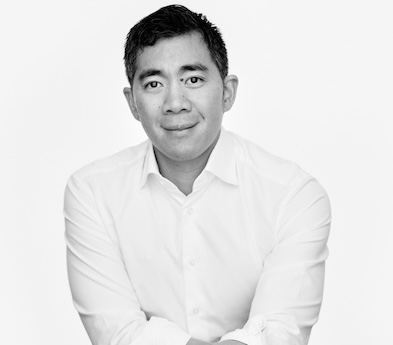
Orthopaedic Surgeon, Adelaide
- Sculco PK, Delanois RE, Lee G-C, Jiranek WA, Abdel MP, et al. Arthrofibrosis After Total Knee Arthroplasty: Biological Mechanisms, Diagnosis, and Treatment: An International Consensus Symposium. HSS Journal. 2025. PubMed: 42668741
- Epidemiology and Risk Factors for Arthrofibrosis Following Total Knee Arthroplasty: Toward Effective Prevention. PubMed: 41309099