This guide covers everything you need to know before your total hip replacement via the direct anterior approach. Preparation is a key part of a successful outcome - understanding the admission process, your hospital stay, and how to prepare your home will help you recover efficiently and with confidence.
Pre-Operative Period
Medications to stop: Blood thinners, anti-inflammatories, aspirin, and certain supplements must be stopped before surgery. Your anaesthetist and Dr Liew will provide a specific list at your pre-admission appointment.
Pre-admission clinic: The hospital will have either a Pre-Admission phone appointment or sometimes requires you to come in. This occurs 1–2 weeks prior to surgery usually.
Pre-Op Investigations: We routinely require blood tests, a urine test, and an ECG for every joint replacement. This enables one final screen to make sure that you are fit and ready for surgery. Sometimes antibiotics will be given pre-operatively if a urinary tract infection is found. As always, if you are unwell, please advise us early so we can reschedule surgery. We never go into surgery when you are not feeling 100%.
Fasting: No food or drink from midnight the night before surgery. Some medications may be taken with a small sip of water - confirm with our team.
GLP-1 medications (Wegovy, Mounjaro, Ozempic or similar): If you are on one of these medications, please note that your fasting instructions are different. You may have been given specific instructions from your anaesthetist - follow them closely, as not all paperwork has caught up with the changing fasting guidelines for patients on these medications. Currently the protocol requires 24 hours fasting from food, and 6 hours from clear fluids. During the 24-hour fast, you may drink clear fluids only - absolutely no milk, soups, or similar. Clear broth is acceptable during the 24 hours, up until 6 hours before surgery.
Your Hospital Stay
You will be admitted on the day of surgery. After your anterior approach hip replacement, you will spend 2–4 nights at Eastwood Private Hospital or Calvary Adelaide Hospital.
- Physiotherapy begins on the day of surgery - you will walk with your physiotherapist the same day as your operation.
- There are no hip precautions required with the direct anterior approach (no raised toilet seat, no hip restriction rules in most cases).
- Pain is managed with regular medications. Please communicate your pain levels clearly to the nursing team.
- Your dressing will usually remain on from surgery until your post-operative review. If there is additional bleeding, we will sometimes place a suction dressing on your wound, or replace the dressing to keep the wound dry. If you have minimal bleeding/fluid, the first dressing change will be at the 2–3 week mark - at our rooms, or with your local doctor or clinic if you are a regional patient.
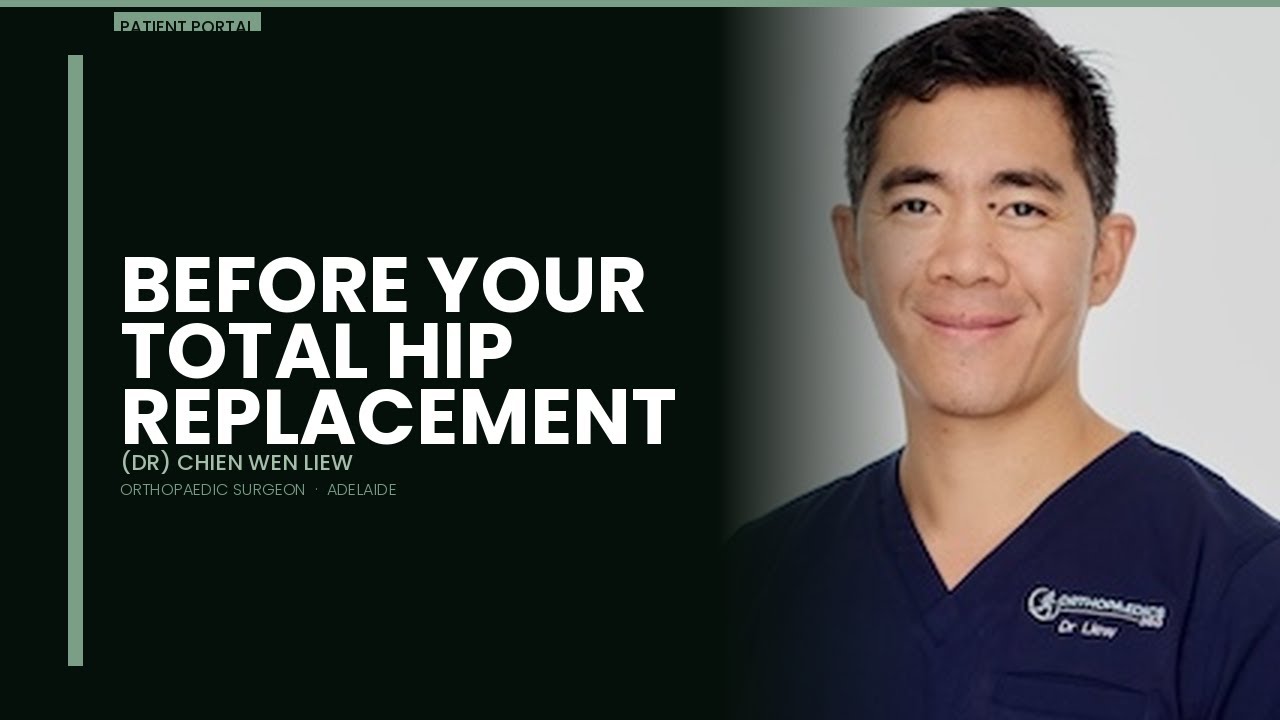
Watch Dr Chien-Wen Liew discuss this topic.
Early Recovery Milestones
Here is what to expect in the weeks following your hip replacement:
- Week 1–2: Walking with a stick. Pain managed with oral medications. Wound dressed. 2-week nurse check (Dr Liew usually in attendance).
- Week 2–3: Increasing independence. Most patients return to driving an automatic vehicle at 2–3 weeks, once off strong pain medication. Hip precautions (if any) typically lifted by 6 weeks.
- Month 2–3: Walking without aids. Returning to most activities. Swimming from 4 weeks post-op.
- Month 6–12: Ongoing strength improvement. Bone ingrowth completing. Returning to golf and low-impact activity.
Frequently Asked Questions
Download Patient Summary
A one-page branded summary of this topic - QR code links to the video or full article.